What Smart Home Do I Need?
Should you choose a wired or wireless system, local or cloud control, a single vendor ecosystem or a mix of devices? This guide explains the main types of smart home systems and helps you choose the best option for your needs.

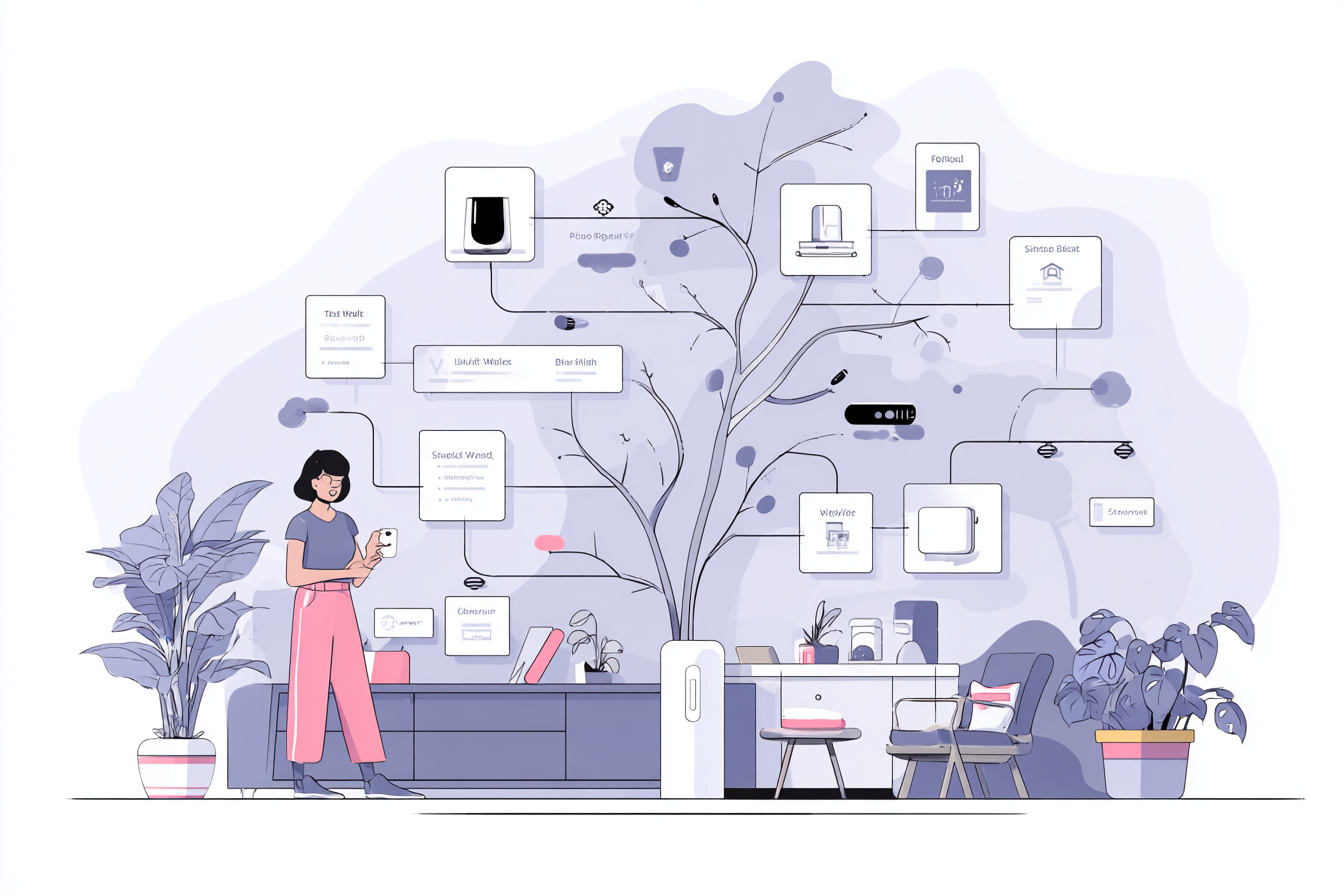
Wired or wireless? Local or cloud? A single brand or a multi-vendor system? If you are facing this choice, this article is a short guide to the key options.
Wired or Wireless Smart Home
Wired Systems
Wired solutions are reliable and durable. They are typically used in private houses, apartments undergoing major renovation, or commercial spaces where stability is important.
Advantages:
- High reliability and stability
- Do not depend on Wi-Fi
- Minimal maintenance after installation
Disadvantages:
- Require planning during the renovation stage
- Higher installation cost
- Limited flexibility for upgrades
Wireless Systems
Wireless solutions are flexible and versatile. They are a good choice for rental properties, existing homes, or situations where renovation has already been completed.
Advantages:
- Can be installed before or after renovation
- Suitable for gradual deployment
- Usually cheaper to install
Disadvantages:
- Dependence on Wi-Fi or radio signal
- Susceptible to interference
- Require proper configuration
Comparison
| Characteristic | Wired | Wireless |
|---|---|---|
| Installation stage | Only during renovation | Before or after renovation |
| Reliability | High | Medium |
| Cost | Higher | Lower |
| Flexibility | Low | High |
Local or Cloud Control
Local Systems
Local systems operate within your own network without the need to connect to external servers. One example is Home Assistant.
Advantages:
- Automations work without internet access
- Full control over privacy
- High reliability
Disadvantages:
- Requires technical knowledge
- More difficult start for beginners
Cloud Systems
Cloud solutions work through manufacturer applications where data is processed on remote servers.
Advantages:
- Easy setup and quick start
- Single application for control
- Fast integration with voice assistants
Disadvantages:
- Do not work without internet access
- Data is sent to the cloud
- Limited configuration options
Comparison
| Characteristic | Local System | Cloud System |
|---|---|---|
| Works without internet | Yes | No |
| Ease of setup | Medium | High |
| Data privacy | High | Low |
Single Vendor or Multi-Vendor
Single Vendor
Ecosystems from a single manufacturer (for example Yandex, Aqara, or Tuya) offer compatible devices that can be managed from one application.
Advantages:
- Simple integration
- Fast setup
- Official support
Disadvantages:
- Dependence on one vendor
- Limited choice of devices
- No deep customization
Multi-Vendor
Systems like Home Assistant allow devices from different manufacturers to be combined within a single platform.
Advantages:
- Freedom to choose hardware
- Wide automation capabilities
- Independence from a single brand
Disadvantages:
- Requires basic technical skills
- Some integrations require additional configuration
Comparison
| Characteristic | Single Vendor | Multi-Vendor |
|---|---|---|
| Ease of start | High | Medium |
| Flexibility | Limited | High |
| Device selection | Limited | Wide |
Conclusions
If you plan to use a smart home in a limited way — controlling lights, climate, or smart plugs — a cloud solution from a single brand can be a convenient starting point.
If you are looking for a long-term and flexible system that can scale over time, our experience shows that the best choice is a wireless system with local control and support for devices from different manufacturers.
This approach provides independence from cloud services, full control over your data, and the ability to connect everything you need — from sensors to boilers and solar panels. Ultimately, the choice depends not so much on the technology as on your goals and the planning horizon for your smart home system.